How bracket strength is measured:
Bracket strength is determined by the number of wrestlers competing who were ranked in NC United's Pre-State College Prospect Rankings (Class of 2026 Top 30, Class of 2027 Top 30, Class of 2028 Top 20). 77 of the 80 ranked wrestlers competed at states.
Bracket classifications:
- ELITE: 4+ ranked wrestlers
- STRONG: 3 ranked wrestlers
- MEDIUM: 2 ranked wrestlers
- LIGHT: 0-1 ranked wrestlers
This data provides context for the broader structural conversation in "Did North Carolina Wrestling Expand Divisions—And Shrink Our Future?"
The Distribution
| Bracket Strength | Count | Percentage |
|---|---|---|
| ELITE (4+ ranked) | 2 | 2% |
| STRONG (3 ranked) | 4 | 4% |
| MEDIUM (2 ranked) | ~12 | ~12% |
| LIGHT (0-1 ranked) | ~80 | ~82% |
What the data shows:
Across 98 weight class brackets, competitive depth varied significantly. Two brackets featured 4+ ranked wrestlers. Four had exactly 3 ranked wrestlers. Most brackets (82%) had 0-1 ranked wrestlers.
In the ELITE and STRONG brackets, every ranked wrestler chose to compete in fields where multiple elite opponents stood between them and a state title. They could have competed at different weights or sought easier paths. They didn't.
The ELITE Brackets
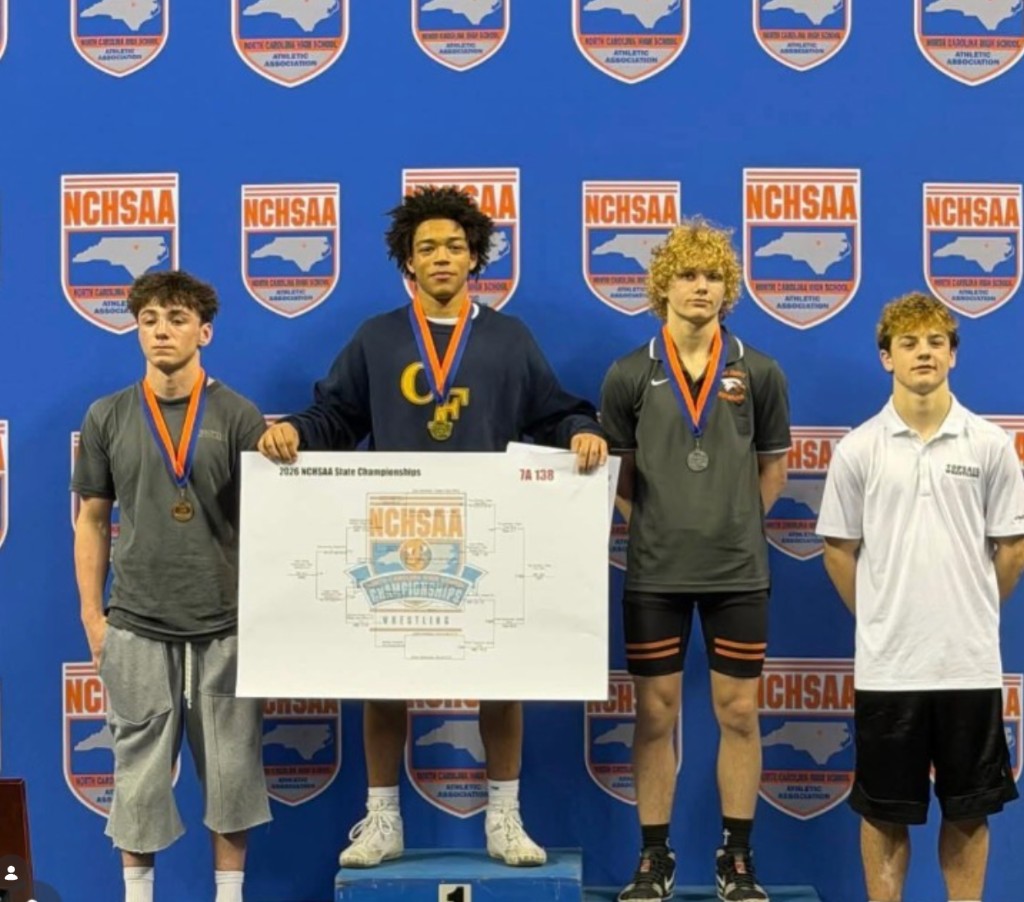
7A 138 lbs
4 Ranked Wrestlers:
- #3 (Cape Fear, 2027) — 1ST
- #17 (Davie, 2027) — 2ND
- #9 (Weddington, 2027) — 3RD
- #8 (Topsail, 2028) — 4TH
defeated and at states to win the title. All four ranked wrestlers placed exactly where seeded—a testament to the depth and quality of competition in this bracket.
What this bracket required: Every wrestler faced multiple ranked opponents. To win, Johnson navigated through two ranked opponents at states. To place, every wrestler had to defeat or compete closely with other elite talent. This is what deep competitive brackets look like.
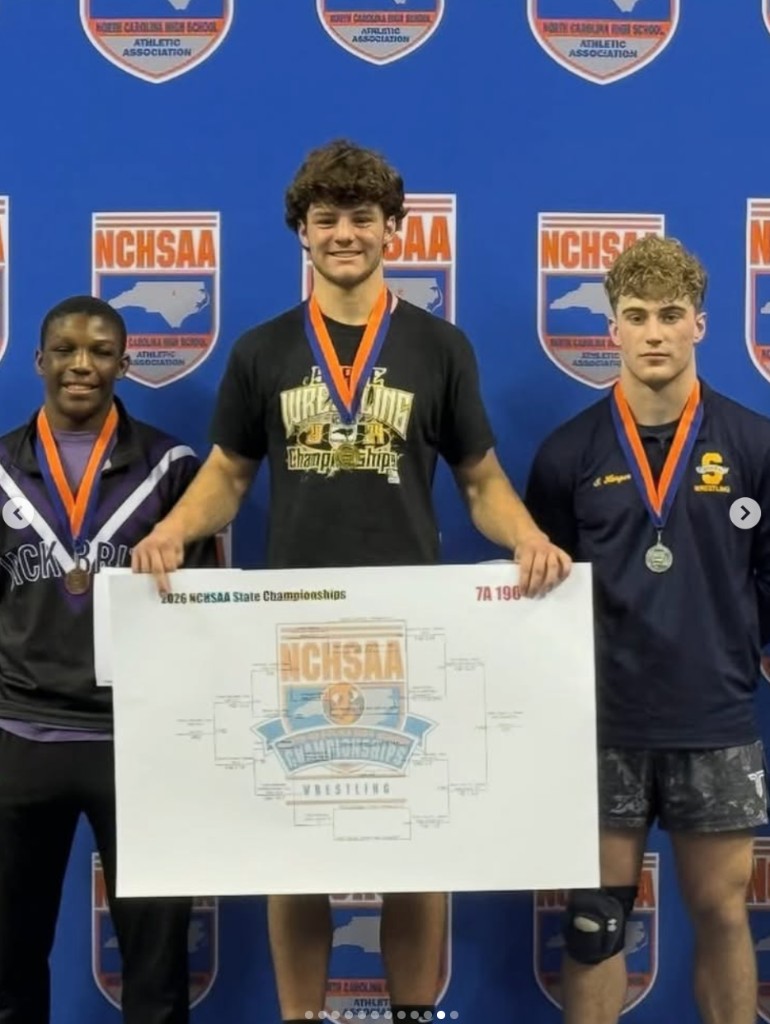
7A 190 lbs
4 Ranked Wrestlers:
- #13 (A.L. Brown, 2026) — 1ST
- #14 (South Iredell, 2026) — 2ND
- #25 (Jack Britt, 2027) — 3RD
- #20 (New Bern, 2028) — DNP
Also competing: (Hillside, 2026, Honorable Mention) — 4TH
defeated 4-2 in the finals. This bracket featured ranked wrestlers from all three classes, plus an honorable mention wrestler who placed fourth, creating the most diverse competitive field of the tournament.
What this bracket required: Wrestlers faced opponents across multiple graduating classes. Yow beat a 54-2 opponent in a close finals match. Harper, Mayfield, and Kahsai all competed knowing any match could be against elite-level talent. El-Amin battled through a bracket stacked with ranked opponents to earn fourth place.
The STRONG Brackets
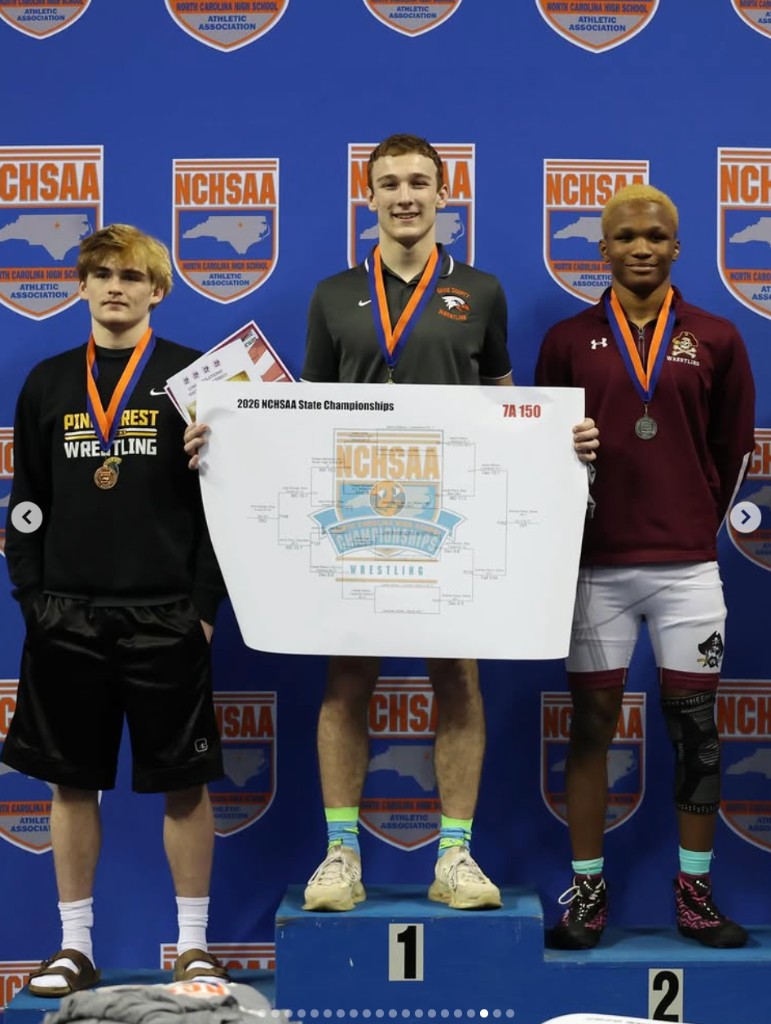
7A 150 lbs
3 Ranked Wrestlers:
- #7 (Davie, 2026) — 1ST
- #1 (Lumberton, 2028) — 2ND
- #5 (New Bern, 2028) — 4TH
Davis navigated two highly-touted 2028 prospects, including beating the #1 ranked 2028 wrestler () in sudden victory 20-17 in the finals. Ellison and Perry both competed knowing they'd face ranked opposition in their path.
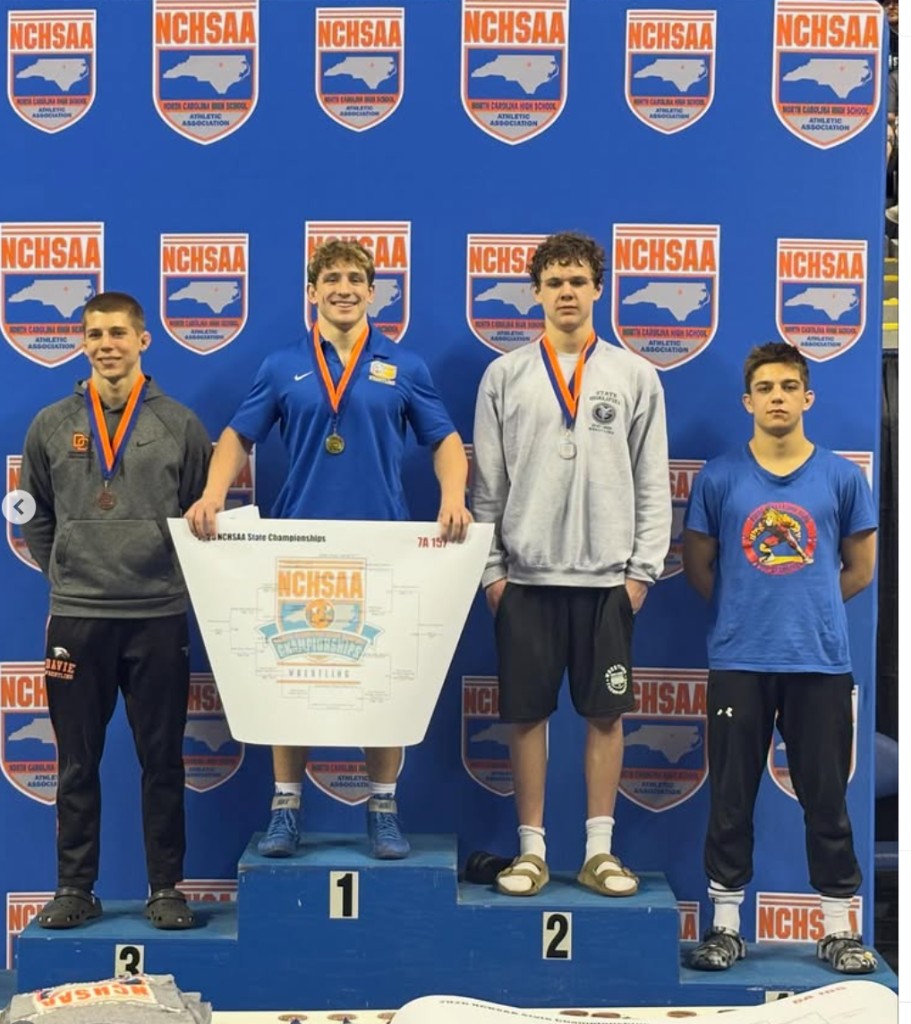
7A 157 lbs
3 Ranked Wrestlers:
- #7 (Garner, 2027) — 1ST
- #13 (Grimsley, 2027) — 2ND
- #29 (Davie, 2026) — 3RD
Gore defeated Gould 7-0 in the semifinals and McCord 1-0 in an extremely close finals match. All three ranked wrestlers placed top-3, with each having to compete through ranked opponents.
7A 165 lbs
3 Ranked Wrestlers:
- #10 (Davie, 2027) — 1ST
- #3 (Cardinal Gibbons, 2028) — 2ND
- #29 (New Bern, 2027) — 3RD
Worrick beat higher-ranked Thompson (#3) in a close 7-6 finals match. Thompson, Bane, and Worrick all competed in a bracket where earning a medal meant navigating multiple ranked wrestlers.
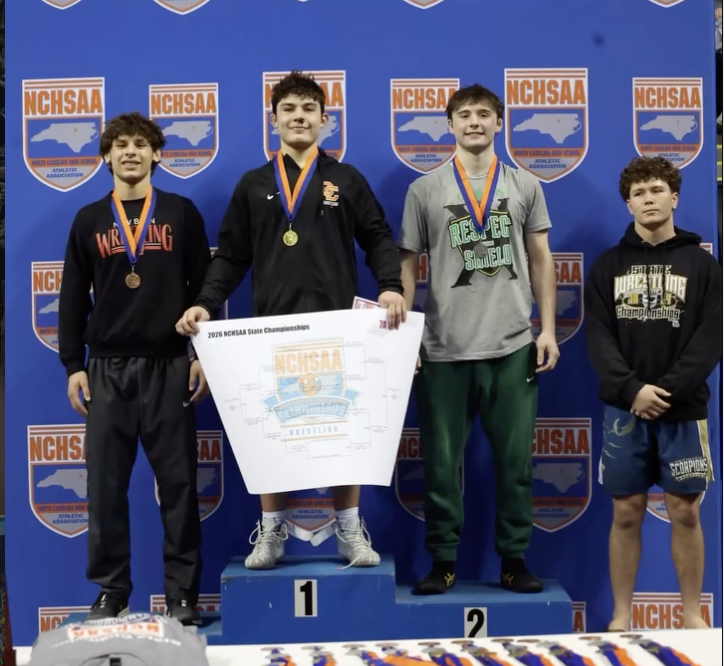
6A 150 lbs
3 Ranked Wrestlers:
- #27 (Piedmont, 2026) — 1ST
- #4 (White Oak, 2028) — 2ND
- #18 (Union Pines, 2028) — 3RD
Oakley (#27) defeated higher-ranked Smith (#4) decisively 9-2 in the finals. All three ranked wrestlers placed top-3, with Smith and De La Torre both navigating a bracket knowing they'd face ranked opponents.
BRACKET_IMAGES["6A-150"] when readyCelebrating Our Iron Men
The Ones Who Had a Choice—And Made the Hard One
In a 7-division system where 82% of brackets are LIGHT (0-1 ranked wrestlers), bracket depth isn't something most wrestlers choose. It's determined by the structure.
The 7-division system created 98 separate weight classes. Ranked talent distributed unevenly across them. Some brackets got depth. Most didn't.
That's a structural outcome, not an athlete decision.
If you're a 150-pounder in 5A and there are no ranked wrestlers at your weight, you didn't avoid competition. You're simply wrestling where you belong. You're a consequence of structural decisions made by leadership.
But some wrestlers had a choice.
They could have bumped up a weight class—or dropped down—and faced an easier bracket. Fewer ranked opponents. A clearer path to a state title.
They chose to stay.
These are our iron men:
- The wrestler who could have moved to 144 or 157 but stayed at 150 to face ranked opponents.
- The wrestler who could have cut to a lighter bracket but chose to compete where the competition was deepest.
- The wrestler who knew moving weight classes would give them a better shot at gold—and stayed anyway.
That's the difference between circumstance and choice.
Most wrestlers in light brackets didn't choose easy paths. The 7-division system created 80+ light brackets—most athletes are just wrestling where they naturally belong.
But iron men chose resistance when ease was available.
They chose growth over guaranteed outcomes. They chose to test themselves when they could have taken the safer route.
Wrestling teaches that growth comes from difficulty. You don't get stronger lifting light weights. You don't get better wrestling easy opponents.
Iron men understand this—and make choices accordingly.
College Coaches Notice the Difference
When college coaches evaluate North Carolina wrestlers, they can clearly see which athletes competed in ELITE and STRONG brackets.
The difference is measurable:
- A wrestler who won an ELITE bracket defeated multiple ranked opponents in a single tournament. They're battle-tested. They've proven they can handle pressure repeatedly.
- A wrestler who won a LIGHT bracket faced zero ranked opponents. They're unproven against elite competition.
Both are state champions. But the context tells drastically different stories.
For college programs building rosters, iron men who seek competitive resistance are easier to project. They've already proven they belong in deep fields.
This is why performance at national events has become increasingly important for North Carolina wrestlers. College coaches need to see how athletes perform when the bracket is stacked.
The iron men in ELITE and STRONG brackets already provided that proof at states.
But who faced the absolute toughest path to gold? Let's look at the data.
The Toughest Roads to Gold
Not all state championships are created equal.
Some champions faced zero ranked opponents. Others had to defeat multiple elite wrestlers just to reach the finals.
Here are the 10 toughest paths to a 2026 state title:
1. Tye Johnson (Cape Fear, 7A 138) — Class of 2027
Ranked opponents faced at states: 2
- Beat #9 (Dec 4-1) in semifinals
- Beat #17 (MD 18-5) in finals
The only champion to face 2 ranked opponents at the state tournament. All four ranked wrestlers in the ELITE bracket placed 1-2-3-4. defeated two of them to claim his title and moved from #3 to #1 in Class of 2027 rankings.
2. Aidan Gore (Garner, 7A 157) — Class of 2027
Ranked opponents faced: 2
- Beat #29 (Dec 7-0) in semifinals
- Beat #13 (Dec 1-0) in finals
Finals decided by a single point. Both ranked opponents defeated on the path to gold.
3. Carson Worrick (Davie, 7A 165) — Class of 2027
Ranked opponents faced: 2
- Beat #29 in semifinals
- Beat #3 (Dec 7-6) in finals
Beat a higher-ranked opponent (#3) in a close finals match. Thompson was ranked #3 in Class of 2028 and a 2025 NHSCA All-American.
4. Andrew Davis (Davie, 7A 150) — Class of 2026
Ranked opponents faced: 1
- Beat #1 (SV-1 20-17) in finals
Defeated the #1 ranked wrestler in Class of 2028 in sudden victory. Ellison was a 2025 NHSCA All-American who entered states 51-1. This was the most impressive single victory of the tournament.
5. Gavin Yow (A.L. Brown, 7A 190) — Class of 2026
Ranked opponents faced: 1
- Beat #14 (Dec 4-2) in finals
Harper entered the match 54-2. The finals was decided by two points after an extremely competitive match. ELITE bracket with 4 ranked wrestlers.
6. Elijah Oakley (Piedmont, 6A 150) — Class of 2026
Ranked opponents faced: 1
- Beat #4 (Dec 9-2) in finals
Ranked #27, defeated the #4 ranked wrestler in Class of 2028. Overcame a 23-rank gap to win decisively.
7. Jose Trejo (Surry Central, 3A 120) — Class of 2026
Ranked opponents faced: 1
- Beat #13 (TB-1 13-12) in finals
Won in a tiebreaker. Went 45-0 on the season, defeating a ranked 2028 prospect in the closest possible match.
8. Lorenzo Alston (Uwharrie Charter, 4A 175) — Class of 2026
Ranked opponents faced: 1
- Beat #25 (Dec 8-1) in finals
Controlled match against a Lynchburg commit who entered 49-1. Went 48-0 on the season after the 7-division system moved Uwharrie Charter from 1A to 4A.
9. Cameron Gue (Mount Pleasant, 4A 132) — Class of 2026
Ranked opponents faced: 1
- Beat #16 (Fall 3:29) in finals
Went 60-1 on the season. Dominated a ranked 2028 prospect en route to his second state title.
10. Jekai Sedgwick (Hoke, 8A 120) — Class of 2027
Ranked opponents faced: 1
- Beat #17 (Fall 1:54) in finals
Went 38-0 on the season. Pinned a ranked 2028 opponent in under two minutes to claim his first state title.
The Pattern:
Only three champions faced 2 ranked opponents at states: Tye Johnson, Aidan Gore, and Carson Worrick.
Most state champions (88 of 98) faced zero or one ranked opponent.
When competitive depth varies this dramatically, the meaning of "state champion" varies with it.
These ten wrestlers chose to compete at their natural weight, knowing ranked opponents stood in their path. They didn't avoid competition. They embraced it.
That's what separates iron men from the field.
What This Reveals
Where ranked talent concentrated:
While 7A had the most ranked wrestlers of any single division (26 ranked wrestlers), the majority of ranked talent came from 6A and below (68% according to the full prospect rankings). This distribution aligns with North Carolina's developmental landscape where elite talent emerges from programs across all school sizes, not just the largest classifications.
Context for evaluation:
Understanding bracket composition helps provide context for individual performances and offers insight into where the state's competitive depth exists. For wrestlers pursuing college opportunities, this data illustrates why performance at national events has become increasingly important for evaluation.
The structural question:
This distribution reinforces the questions raised in our first article: When competitive depth varies this significantly across 98 brackets, what does that mean for championship meaning, recruiting clarity, and long-term development?
Looking Ahead
Every state champion earned their title by defeating everyone in their bracket. The data simply provides context for understanding the different competitive landscapes wrestlers navigated.
The wrestlers who competed in ELITE and STRONG brackets—all 20 ranked wrestlers across these 6 weight classes—chose to compete in fields where every match tested them. They sought growth through resistance. North Carolina wrestling's future will be built by athletes who make those choices.
For North Carolina wrestling's continued growth as a developmental state, understanding where elite talent concentrates and how competitive depth varies can inform conversations about structure, development, and goals.
Data compiled from NC United Wrestling's pre-state rankings and 2026 state championship results.
Continue to Part 3: Three Join the Immortals: North Carolina's Historic 2026 Four-Time State Champions